
Laser cutting is an advanced technology that employs a high-power-density laser beam instead of traditional mechanical cutting tools. It offers significant advantages—such as high precision, rapid cutting speeds, design flexibility, material savings through automatic nesting, smooth cut edges, and low processing costs—and is progressively improving upon or replacing traditional metal-cutting equipment. Because the mechanical components of the laser cutting head do not make direct contact with the workpiece, the surface remains free from scratches during operation.
From the perspectives of physics and material processing, laser cutting offers distinct advantages: high cutting speeds, smooth and even edges (often eliminating the need for secondary processing), a minimal heat-affected zone (HAZ), and negligible material deformation. The process produces a narrow kerf (typically 0.1 mm to 0.3 mm) and results in edges free from mechanical stress or shear burrs. When combined with CNC programming, the process ensures high precision and repeatability without damaging the material surface; it can execute complex 2D patterns and is particularly well-suited for cutting large sheets, offering an extremely economical and time-efficient alternative that eliminates the need for mold development.
Laser cutting systems are primarily composed of core modules, including the laser source, beam delivery system, CNC motion control system, automatic height-adjusting cutting head, work platform, and high-pressure gas assist system. During actual processing, multiple parameters collectively influence cutting quality and efficiency. Some of these parameters are determined by the inherent technical specifications of the laser and the machine tool itself, while others are variable and require dynamic adjustment based on specific processing conditions. The following are the six key process parameters that determine laser cutting quality:
1. Beam Mode
The beam mode is a key inherent factor determining cutting quality. The fundamental mode (also known as the Gaussian mode or TEM00) is the ideal mode for cutting; it features a Gaussian energy distribution and excellent focusing capabilities, typically found in low-power lasers (under 1 kW). In contrast, multi-mode beams consist of a mixture of higher-order modes. At the same power level, multi-mode beams exhibit poorer focusability and more dispersed energy distribution, resulting in inferior cutting capability and cut quality compared to single-mode (fundamental mode) lasers.
Figure 1: Process parameters for single-mode laser cutting of common materials | |||||
laser power | Materials | Thickness (mm) | Assist gas | Cutting speed (cm/min) | Kerf width (mm) |
250w | Low-carbon steel | 3 | O₂ | 60 | 0.2 |
Stainless steel | 1 | O₂ | 150 | 0.1 | |
Titanium alloy | 10(40) | O₂ | 280(50) | 1.50(3.5) | |
Acrylic (Plexiglass) | 10 | N₂ | 80 | 0.7 | |
Aluminum oxide | 1 | O₂ | 300 | 0.1 | |
Polyester carpet | 10 | N₂ | 260 | 0.5 | |
Cotton textiles (multi-layer) | 15 | N₂ | 90 | 0.5 | |
Cardboard | 0.5 | N₂ | 300 | 0.4 | |
Corrugated cardboard | 8 | N₂ | 300 | 0.4 | |
Quartz glass | 1.9 | O₂ | 60 | 0.2 | |
Polypropylene | 5.5 | N₂ | 70 | 0.5 | |
Polystyrene | 3.2 | N₂ | 420 | 0.4 | |
Rigid PVC | 7 | N₂ | 120 | 0.5 | |
Fiber-reinforced plastic | 3 | N₂ | 60 | 0.3 | |
Wood (plywood) | 18 | N₂ | 20 | 0.7 | |
500w | Low-carbon steel | 1 | N₂ | 450 | …… |
3 | N₂ | 150 | …… | ||
6 | N₂ | 50 | 0.15 | ||
1.2 | O₂ | 600 | 0.15 | ||
2 | O₂ | 400 | 0.20 | ||
3 | O₂ | 250 | …… | ||
Stainless steel | 1 | O₂ | 300 | …… | |
3 | O₂ | 120 | …… | ||
Plywood | 18 | N₂ | 350 | …… | |
Figure 1: Process parameters for multimode laser cutting of common materials | ||||
Materials | Thickness (mm) | Cutting speed (cm/min) | Kerf width (mm) | laser power(KW) |
Aluminum | 12 | 230 | 1 | 15 |
Carbon steel | 6 | 230 | 1 | 15 |
Stainless steel | 4.6 | 130 | 2 | 20 |
Boron/epoxy composite | 8 | 165 | 1 | 15 |
Fiber/epoxy composite | 12 | 460 | 0.6 | 20 |
Plywood | 25.4 | 150 | 1.5 | 8 |
Acrylic | 25.4 | 150 | 1.5 | 8 |
Glass | 9.4 | 150 | 1 | 20 |
Concrete | 38 | 5 | 6 | 8 |
2. Laser Power
The laser power required for cutting depends primarily on the material's physical properties (such as reflectivity and absorptivity), its thickness, and the target cutting speed. Laser power significantly influences cutting thickness, cutting speed, and kerf width. Generally, increasing the laser power allows for cutting thicker materials and achieving higher speeds, though it also tends to increase the kerf width.
[Process Reflection]
In your actual production, have you ever encountered issues where—in a pursuit of higher speeds—power was increased, resulting in an excessively wide kerf or over-burning when cutting thin sheets? We encourage you to review the power-to-thickness matching chart for your current equipment to see if there is room for optimization.
3. Focal Position
Controlling the focal position directly affects kerf width and the roughness of the cut surface. Based on professional processing experience, the focal point is typically positioned at approximately one-third of the material thickness below the surface. At this position, the cutting depth is usually maximized while the kerf width is minimized, yielding an ideal perpendicular cross-section and high cutting quality.
4. Focal Length
The choice of focal length requires a balance based on the material thickness. When cutting thicker steel plates, a beam with a longer focal length is used to achieve a greater depth of focus, thereby ensuring good perpendicularity through the thickness of the material. However, a long focal length results in a larger spot diameter and reduced power density, leading to slower cutting speeds; consequently, higher laser power is often required to maintain a specific cutting speed. Conversely, when cutting thin sheets, a beam with a shorter focal length is preferable; this produces a smaller spot diameter and higher power density, enabling extremely fast cutting speeds.
5. Assist Gas
The choice of assist gas and the control of its pressure play a decisive role in the composition of the cut edge and the formation of dross. For instance, oxygen (O2) is commonly used as the assist gas when cutting low-carbon steel. This utilizes the intense exothermic combustion reaction between iron and oxygen as an auxiliary heat source to facilitate the cutting process, resulting in high cutting speeds and excellent edge quality—specifically, a high-quality cut free of dross. The assist gas pressure must be determined by comprehensively considering factors such as material type, plate thickness, cutting speed, and required edge surface quality. As gas pressure increases, kinetic energy rises, thereby enhancing the equipment's dross removal capability.
6. Nozzle Structure
The structural shape of the nozzle and the size of its exit aperture significantly influence the quality and efficiency of laser cutting. Common nozzle shapes in industrial applications include cylindrical, conical, and square designs. To ensure stable airflow, laser cutting typically employs a coaxial gas-blowing method (where the assist gas flow is coaxial with the laser beam). If the airflow is not coaxial with the optical axis, excessive spatter is likely to occur during cutting, severely compromising the flatness of the cut edge. To ensure process stability, the distance between the nozzle tip and the workpiece surface must be strictly controlled—usually maintained between 0.5 mm and 2.0 mm—to facilitate smooth cutting operations.
Figure 3 Examples of common laser cutting process parameters for metal materials | ||||
Materials | Thickness (mm) | Assist gas | Cutting speed (cm/min) | Laser power (kW) |
Low-carbon steel | 1.0 | O₂ | 900 | 1000 |
1.5 | 300 | 300 | ||
3.0 | 200 | 300 | ||
6.0 | 100 | 1000 | ||
16.2 | 114 | 4000 | ||
35 | 50 | 4000 | ||
30CrMnSi | 1.0 | O₂ | 200 | 500 |
3.0 | 120 | 500 | ||
6.0 | 50 | 500 | ||
Stainless steel | 0.5 | O₂ | 450 | 250 |
1.0 | 800 | 1000 | ||
1.6 | 456 | 1000 | ||
3.2 | 180 | 500 | ||
4.8 | 400 | 2000 | ||
6.0 | 80 | 1000 | ||
6.3 | 150 | 2000 | ||
12 | 40 | 2000 | ||
Titanium alloy | 3.0 | O₂ | 1300 | 250 |
8.0 | 300 | 250 | ||
10.0 | 280 | 250 | ||
40.0 | 50 | 250 | ||
About KF Laser
KF Laser is a high-tech enterprise focusing on the research and development, production and sales of laser and machine tool equipment.Relying on cutting-edge technological innovation, the company is committed to providing customers with efficient and precise laser processing solutions. Its main products include fiber laser cutting machines, laser welding machines, laser marking machines, CNC machine tools and other equipment.
KF Laser adheres to the business philosophy of "quality first, customer first". Through continuous technological improvement and product innovation, it continuously improves the performance and reliability of equipment, meets customers' diverse processing needs, and provides customers with comprehensive technical support and solutions.


-
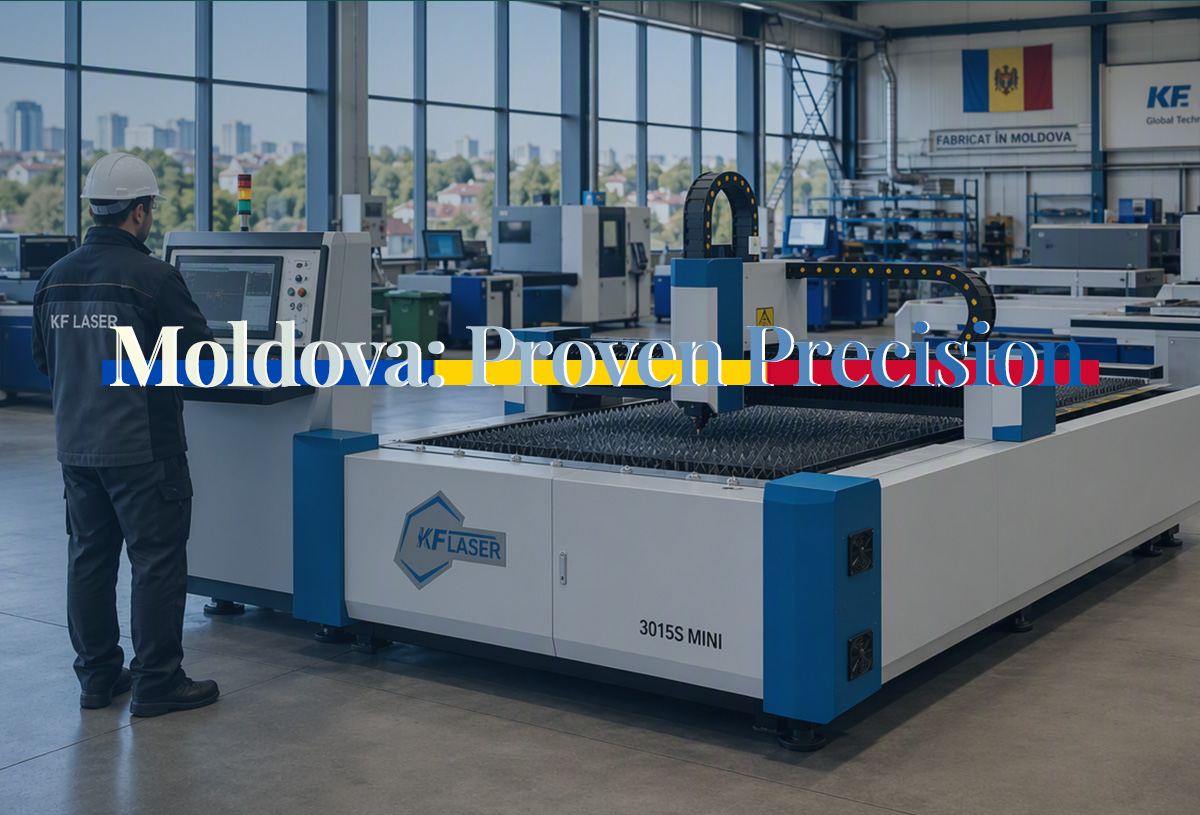 [August 3, 2026] – KF Laser is pleased to share positive feedback from our valued partner in Moldova, further solidifying our reputation for excellence in the Eastern European industrial sector. Following the recent delivery and commissioning of a high-performance Fiber Laser Cutting Machine, the clCases
 -
 [July 2026] – KF Laser recently had the honor of hosting a key business delegation from Canada, facilitating an in-depth factory tour and strategic technical exchanges.The visit served as a pivotal opportunity to showcase KF Laser’s manufacturing excellence and to further strengthen our growing partCompany News
 -
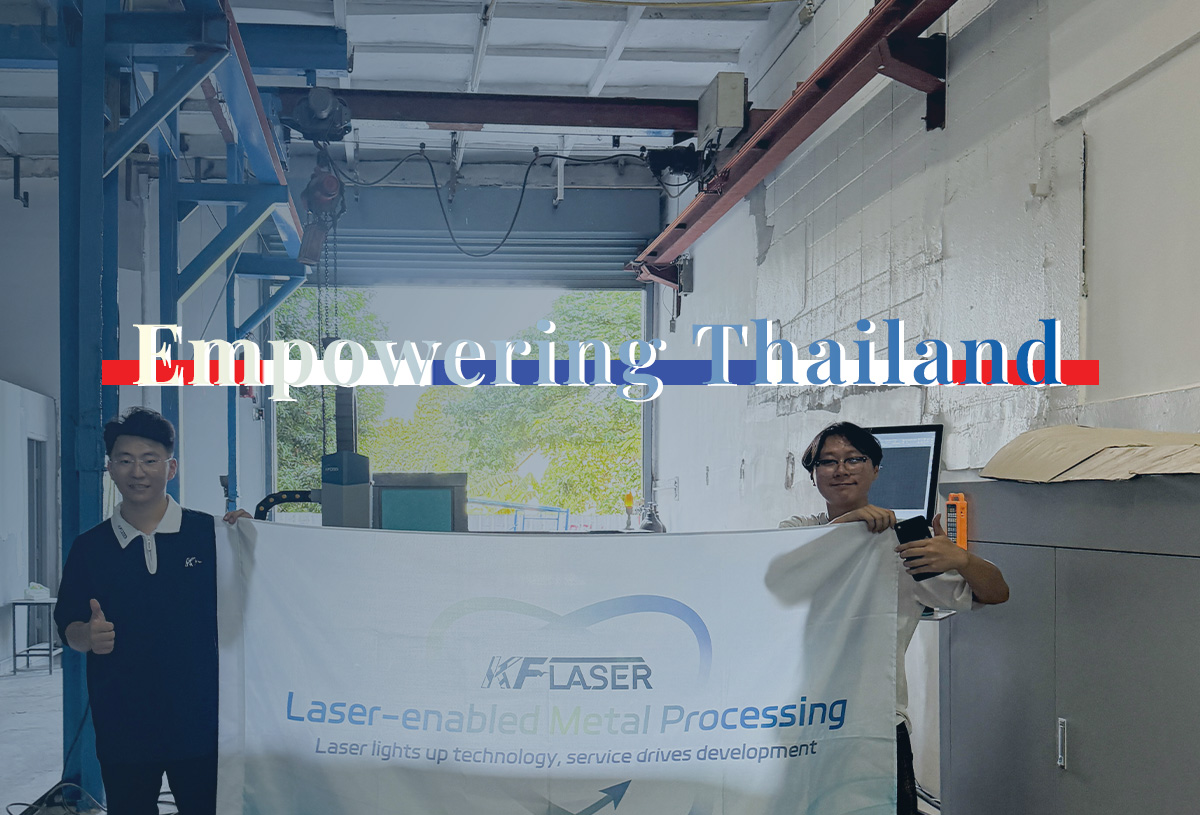 KF Laser’s technical team recently completed the successful installation and commissioning of a fiber laser cutting machine in Thailand, providing comprehensive on-site training to ensure optimal production efficiency for our clients.Cases


Subscribe to KF Laser
Obtain information in the first instance.
Share